Lima Kitchens designs and installs kitchens. We are not neurodivergence specialists, and what follows is not clinical guidance. It is a set of things clients have taught us over the years, situations they brought to us and changes we made together that reduced the daily friction in their homes.
Some of it worked better than we expected. Some of it looks strange written down. All of it came from a real household.
Speaking on The Home Improvement Podcast, Kate from Ace Your Space described what living in a neurodivergent household can feel like:
“a bomb exploding in an already chaotic life”
Design cannot fix that. It can stop the house adding to it.
One thing worth saying at the start. Neurodivergence is not one thing. ADHD, autism, dyslexia and dyspraxia bring different needs, and two people with the same diagnosis often want opposite things from a room. Nothing below is a rule. It is a list of questions worth asking before the cabinetry is ordered.
The Corner we Boxed in
Kate’s own kitchen is neutral, with lighting options and a lot of drawers. The detail that tells you most is the corner. She had it boxed in rather than fitted with a corner unit and lost the storage entirely.
Her reasoning, in her words:
“you’ll lose the items in that space because you’ll forget that they’re there”
This is the most common thing we deal with. Not a memory problem in the developmental sense, but the way working memory behaves when something drops out of sight. If you cannot see it, you stop thinking about it. Then you buy another one. Then the cupboard fills with three of the same thing and the frustration is not about the cupboard at all.
What Lima does about it:
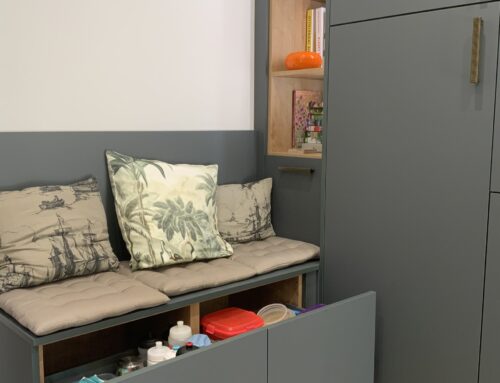
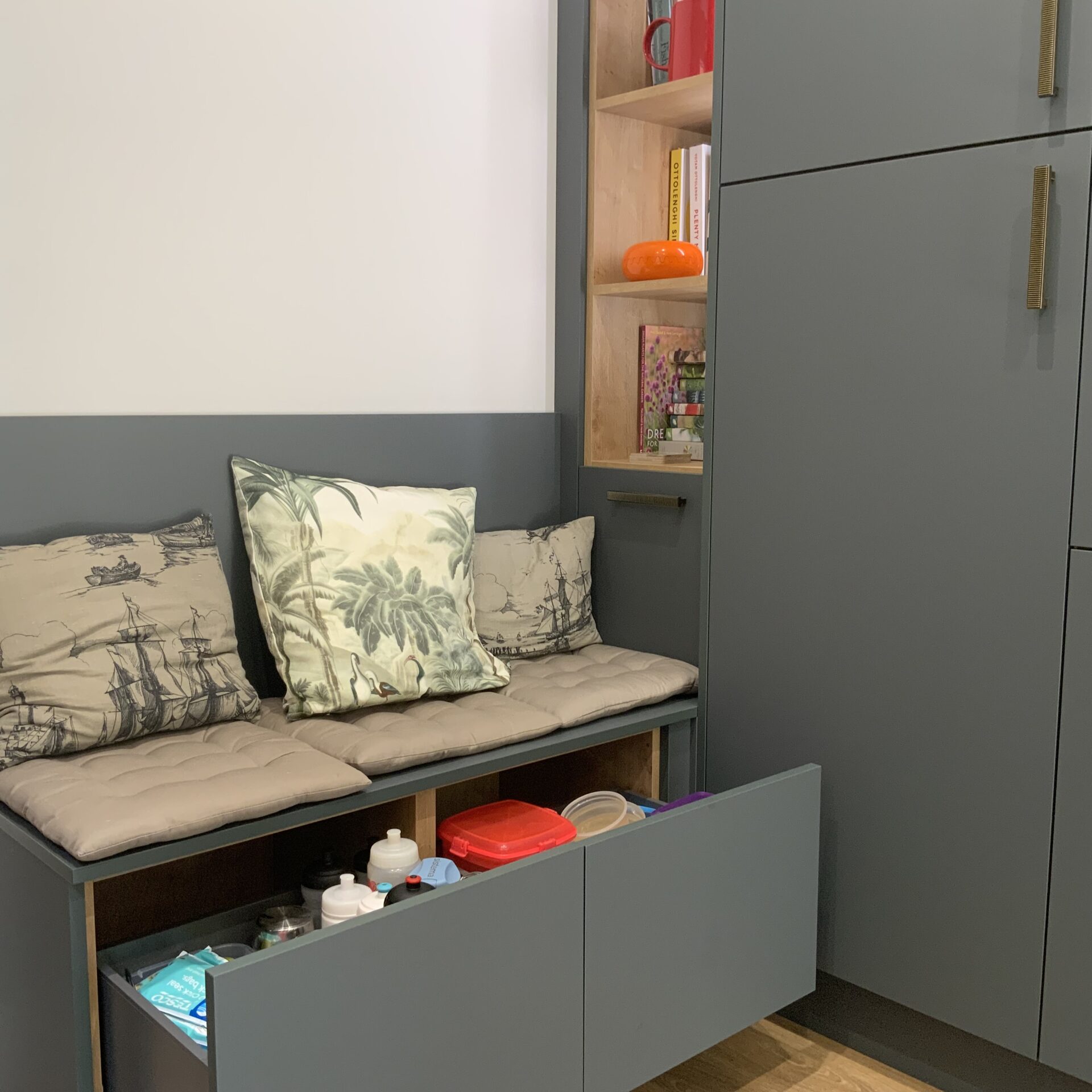
– Drawers instead of base cupboards, so the contents come to you rather than you going into the dark
– Shallow storage in preference to deep, because the back of a deep cupboard is a place things go to be forgotten
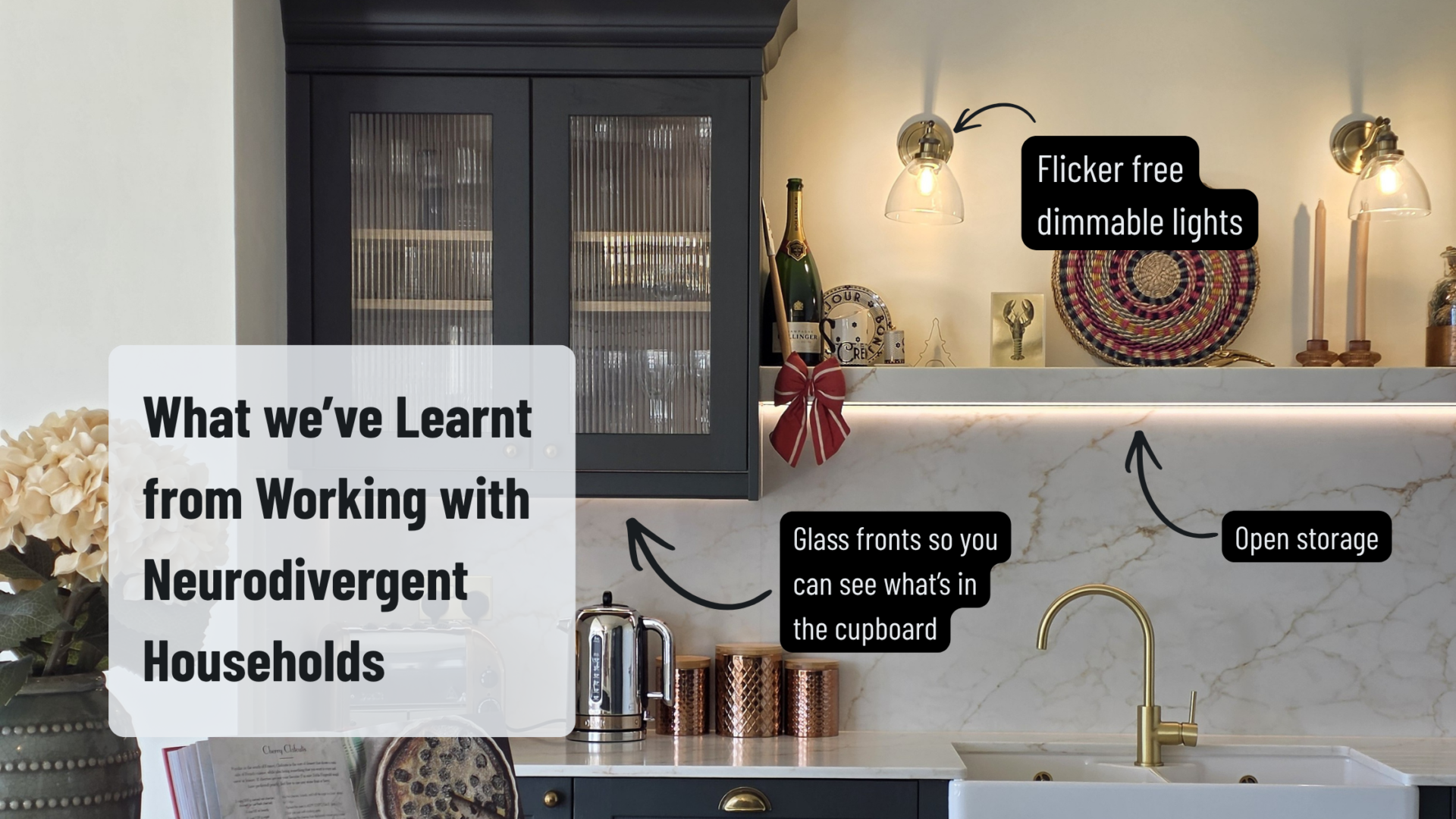
– Internal lighting, which sounds like a luxury and works like a memory aid
– Glass fronts or open shelving where the visual noise is tolerable, closed where it is not
– Clear containers, bold labels, and things stored where they are used rather than where they tidily belong
The balance point is personal. Total visibility helps some people and overwhelms others. It is worth deciding room by room rather than applying one rule throughout.
The island that became a desk
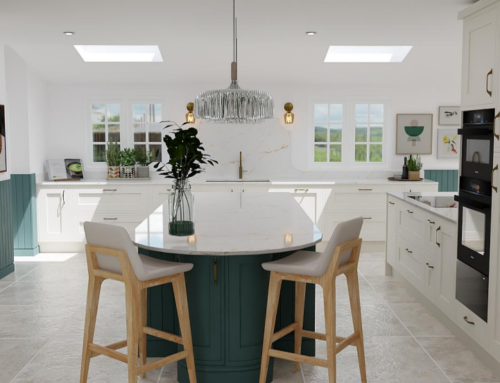
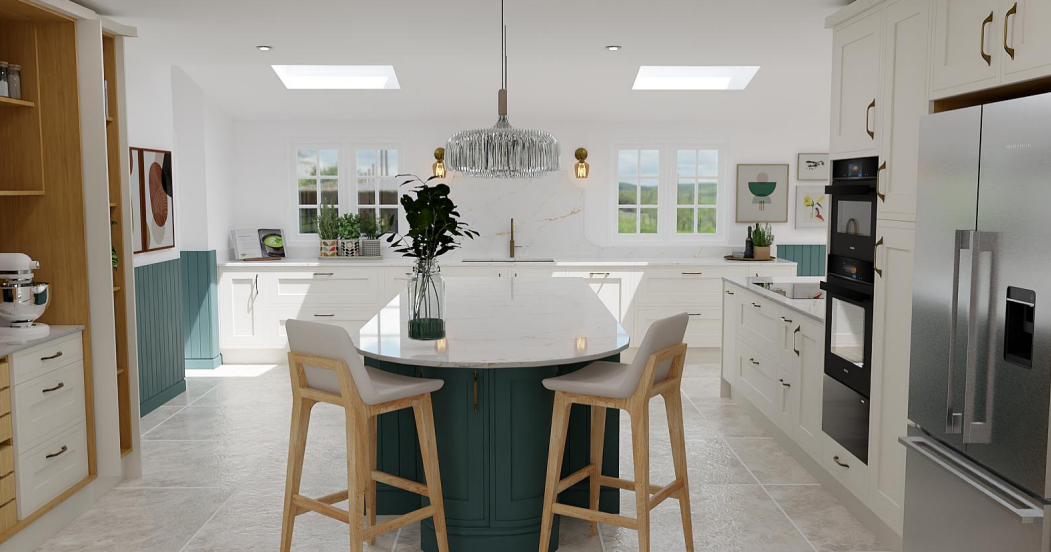
Almost everyone wants an island. A proper centrepiece with generous workspace, somewhere the kitchen finally makes sense as a room.
Then you move in, and it becomes the laptop, the video calls, the paperwork and the pens. Because it is your favourite space in the house. Because it is a few steps from the tap, which reminds you to get a drink, and a few steps from the fridge, which reminds you to stop for lunch.
That is not the dream going wrong. For a lot of people it is the room doing something more useful than looking good, and prompts like those are worth having.
So we plan for it. Somewhere for the notepads, pens and chargers to live, sockets where the laptop actually sits, and a bit of thought about what is behind you on a video call. Ignore it and those things end up in a permanent pile on the worktop, which becomes the visual clutter the rest of the design was trying to reduce.
A small allowance at planning stage. Close to impossible to add afterwards.
Zones, without walls
Kate’s point on the podcast was that
“multi surface spaces are actually quite hard for neurodivergent brains”
and she recommends creating zones throughout the home even during renovation chaos.
Open plan does not have to mean undefined. In several homes Lima has worked on, the answer has been a neutral scheme throughout with tonal variation marking where different tasks happen. Nothing dramatic. Enough that the room tells you what it is for.
Lighting does a lot of this work. So does furniture placement, and a change of floor finish or a rug at a threshold.
Sensory load runs both ways
Dimmable lighting, acoustic panels, rugs and blinds get specified as decoration. In these homes they are doing a different job, which is managing how much a room is asking you to process at any given moment. Adjustable matters more than any particular setting, because tolerance changes from day to day.
On lighting specifically, the issue is flicker and glare rather than brightness alone. Ask for flicker free drivers, control the glare, and make it dimmable with separate circuits so the room can be turned down without being turned off.
The part that gets missed is that not everyone wants less. Some people are looking for more sensory input, and in a kitchen that tends to come through touch rather than sound or light. Grain against no grain. Knurled handles and edges against smooth ones. The temperature difference between stone, timber and metal, which is why a stone worktop running into a timber one gives you two different things to reach for without changing anything visually.
These are specification decisions. They cost nothing extra if we know to make them at design stage.
Independence and oversight
Lima has fitted lockable units in kitchens where a parent needed to keep some oversight of snacks as a child got older and more independent.
Managing hunger and satiety cues is a genuine challenge in some households, and it does not disappear as children gain independence, it just becomes harder to be present for. A lock on one cupboard is not a statement about anyone. It is a way of keeping a conversation going without it having to happen twenty times a day.
We mention it because nobody else does, and because the households it suited found it useful.
Start the decluttering early
The one piece of advice here that is not about cabinetry.
Decluttering before a renovation is harder than most people plan for. Sentimental attachment, decision fatigue, worry about needing something later and guilt about waste all pull in the same direction. Kate put it plainly: “being sentimental about things can be a real struggle”.
What has worked for our clients:
– Start months ahead, not weeks
– Work in small sessions rather than one long push
– Box things up and revisit in six months, then donate what was not missed
– If you use a professional organiser, speak to more than one. It is a personal job and it only works if you are comfortable with the person doing it
Frequently asked questions
How do I make a kitchen more neurodivergent friendly?
Favour drawers over deep cupboards, keep storage shallow, light the insides, and store things where they are used. Add flicker free dimmable lighting and integrated waste separation. Then adjust the balance of open and closed storage to suit whoever lives there, because visibility helps some people and overwhelms others.
Is hidden storage always a bad idea?
No, but it has a cost. Anything out of sight is easier to forget, which leads to duplicate buying and clutter elsewhere. The workable answer is usually mixed: everyday items visible or in shallow drawers, rarely used items put away.
Should I avoid open plan?
Not necessarily. Undefined space is the problem more often than open space. Zones marked with tone, lighting, flooring or furniture give a room definition without walls.
What is the first thing to change?
Walk your own routine before anything is drawn. Note where you actually stand, where things pile up and where you keep going back and forth. Kate’s point on the podcast was that these pain points “need to be fundamental in terms of the design process”, because functionality is far harder to change later than finishes.
How early should I start decluttering before a renovation?
Months rather than weeks, in small sessions.
Talking to us about it
If any of this sounds like your household, it is worth raising at the first design conversation rather than at the point where the drawings are being finalised. Almost everything above was a planning decision, not an expensive one.
Lima Kitchens designs and installs kitchens across Milton Keynes, Leighton Buzzard and the surrounding areas.
If you would rather listen than read, Kate’s full conversation is on The Home Improvement Podcast at homeimprovementpodcast.co.uk.
You can listen on Apple here, watch on YouTube here
You can visit Kate’s website here